
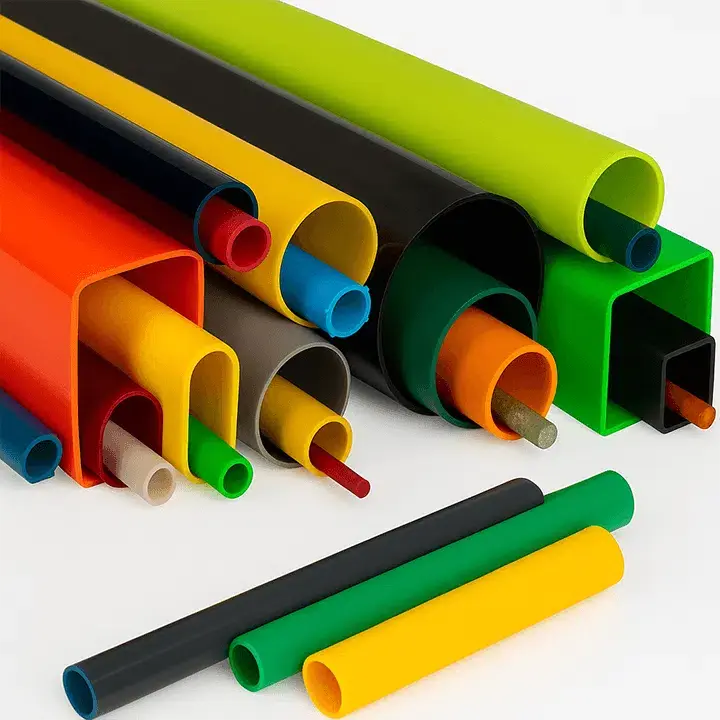
Design challenges rarely appear as simple drawings on paper. They arrive with tight tolerances, performance demands, and pressure for consistency across every unit produced. Plastic extrusion supports this reality by shaping materials into continuous profiles with controlled precision. It allows complex ideas to move forward without distortion, ensuring that design intent remains intact even when production scales and conditions begin to test reliability.
How Plastic Extrusion Handles Complex Profiles with Precision
Every design carries intent, but execution often introduces variation that affects performance. Plastic extrusion addresses this concern by using a shaped die that guides molten material into a defined profile with consistent dimensions.
This method supports complex requirements through:
- Maintaining uniform cross sections across extended production lengths
- Creating detailed profiles with tight dimensional control
- Integrating grooves, seals, or channels within a single structure
- Allowing repeatable output without frequent recalibration
Each stage ensures that the final product reflects the original design with minimal deviation.
Material Flexibility in Plastic Extrusion for Functional Design
Material behaviour often determines whether a design performs well under real conditions. The strength of plastic extrusion lies in its ability to align material choice with specific functional needs.
This flexibility allows engineers to:
- Select polymers suited for impact resistance or thermal stability
- Balance rigidity and flexibility within the same profile
- Maintain consistent material flow across long production cycles
- Combine layers when different properties are required in one product
Such adaptability ensures that design decisions remain practical during manufacturing and usage.
Why Continuous Manufacturing Improves Design Efficiency
Interruptions in production often lead to variation, rework, and increased cost. A continuous process helps avoid these challenges by maintaining steady output without breaks or adjustments.
This approach supports better planning, reduces material waste, and simplifies scaling. It also allows complex designs to move smoothly from development to production without losing consistency. As a result, manufacturing remains aligned with design expectations throughout the process.
Conclusion
Complex design challenges become manageable when consistency, material control, and process stability work together. A well-structured extrusion process supports accuracy across every stage of production. It ensures that detailed designs translate into reliable products without unnecessary compromise or inefficiency.
Also Read
- Outsourcing HR Tasks: Streamlining Business Operations
- Key Role of Water Safety Professionals and Life Guard Instructor Course
- How To Use Your Free Kundli To Choose And Care For Gemstones?

